Muong Hoa Valley
The Muong Hoa Valley below Sapa: rice terraces, Hmong and Giay villages, old carved stones and the walking trail from Lao Chai to Ta Van.
The Muong Hoa Valley (Thung lũng Mường Hoa) runs southeast from Sapa, carved by the Muong Hoa stream and lined on both sides by rice terraces that climb the slopes in hundreds of thin steps. It is the valley most people walk when they trek from Sapa, and it holds several of the villages where families take in guests for the night.
Villages of the Muong Hoa Valley
Each village belongs to a different people. Lao Chai, the first on the usual trail, is Black Hmong, with houses of wood and bamboo spread among the terraces. A little further down, Ta Van is a Giay village. The Giay build lower, more solid houses, and the women wear bright blouses fastened at the side. Further on, Ban Ho is home to Tay families who live in stilt houses near the river.
Walking between them, you see how the work of the year moves across the valley: buffalo ploughing the flooded terraces in spring, children minding ducks on the paths, and maize and hemp in the higher fields.
The carved stones
Scattered among the fields of the Muong Hoa Valley are large boulders carved with lines, spirals, figures and shapes that some read as maps or houses. Nobody knows for certain who made them or when. They are protected as a national heritage site, and several stand beside the road between Lao Chai and Ta Van. Local people have their own stories about them, and guides will point out the ones they know.
Walking the valley
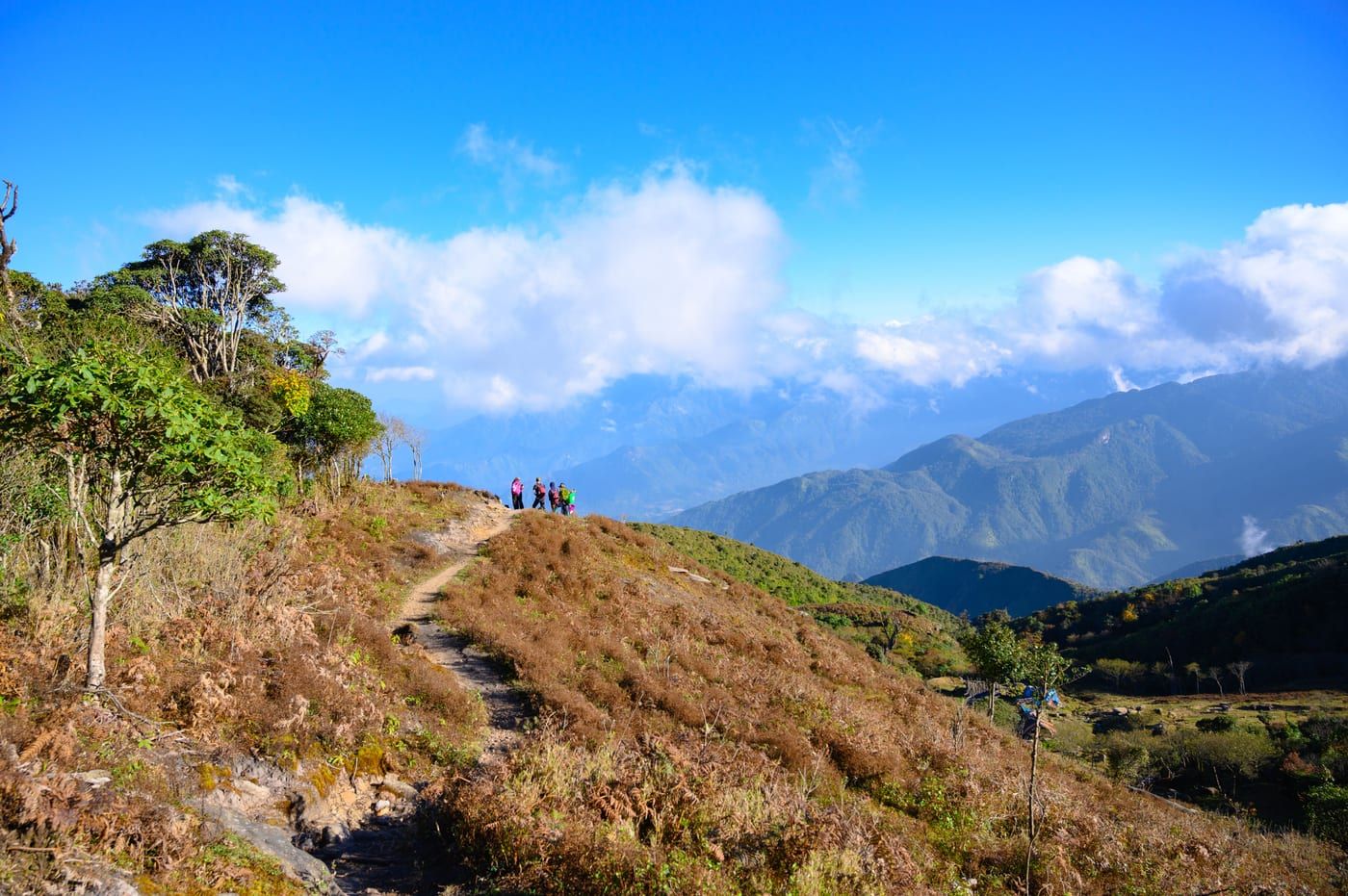
The classic walk runs from Sapa down to Lao Chai and on to Ta Van, a day of steady downhill paths, slippery after rain. Hmong guides, usually women from the villages, lead the way and are worth hiring; they know which paths are open and whose house serves lunch. Many people stay a night in Ta Van and walk on the next day.
The road through the valley now carries traffic, so the quieter paths are those on the far side of the stream. An entry fee is charged at the head of the Muong Hoa Valley. For the seasons of the terraces, see the Sapa overview.
Stories
Muong Hoa Valley: stories are on the way.