Festivals
Vietnamese New Year Traditions: A Guide to Tết Customs
Vietnamese New Year traditions explained: Tết preparations, lucky money, the first visitor, flowers, greetings and food, and how customs vary by region.
Vietnamese food traditions for festivals and family occasions, from Tet cakes and pork rolls to the five-fruit tray, and what each dish means.
Some Vietnamese food is eaten every day; some is cooked only when the calendar or the family calls for it. The second kind, the heart of Vietnamese food traditions, carries meaning. A dish may stand for the sky or the earth, for a wish for the new year, or for the bond between husband and wife, and families know which one belongs on which table.
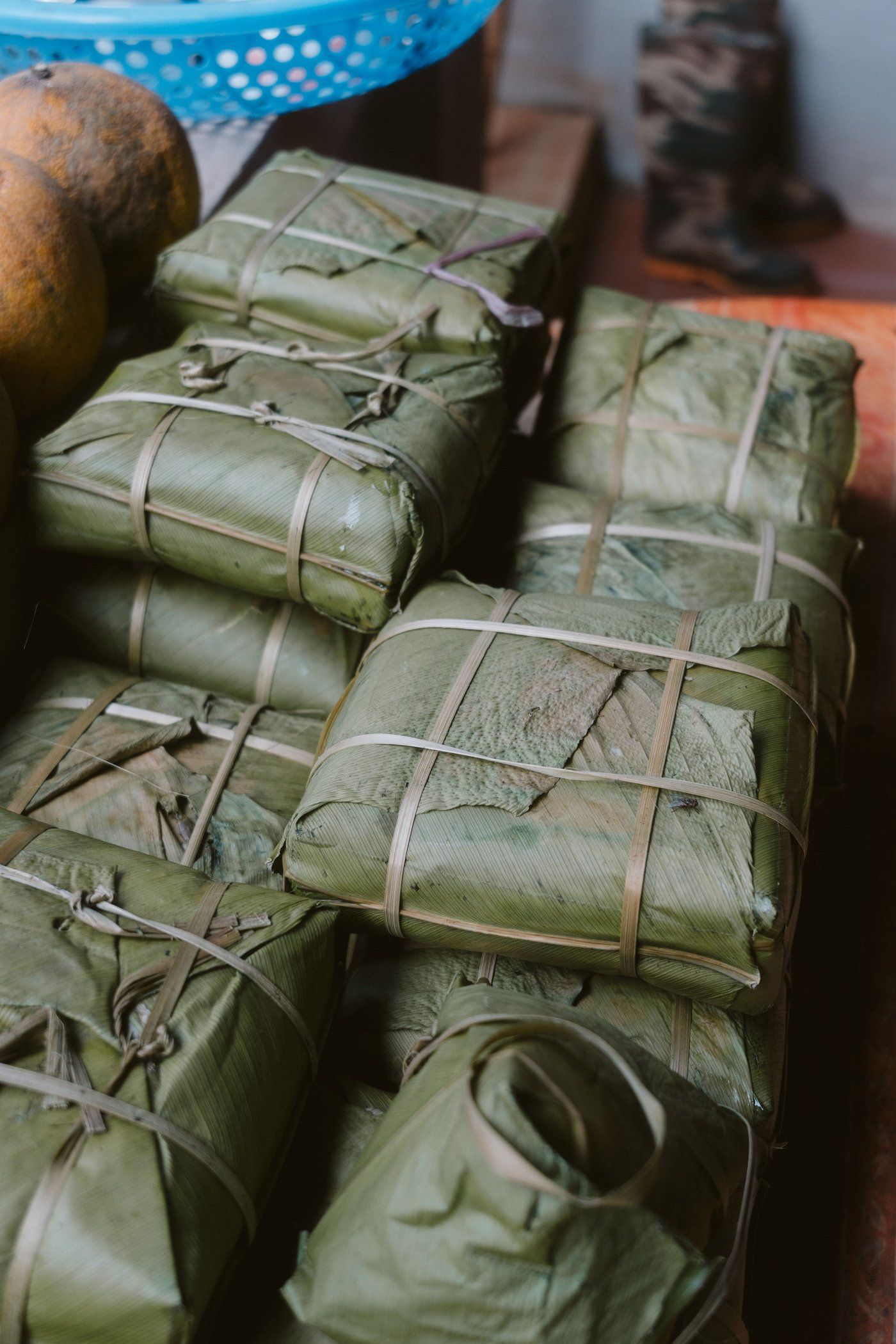
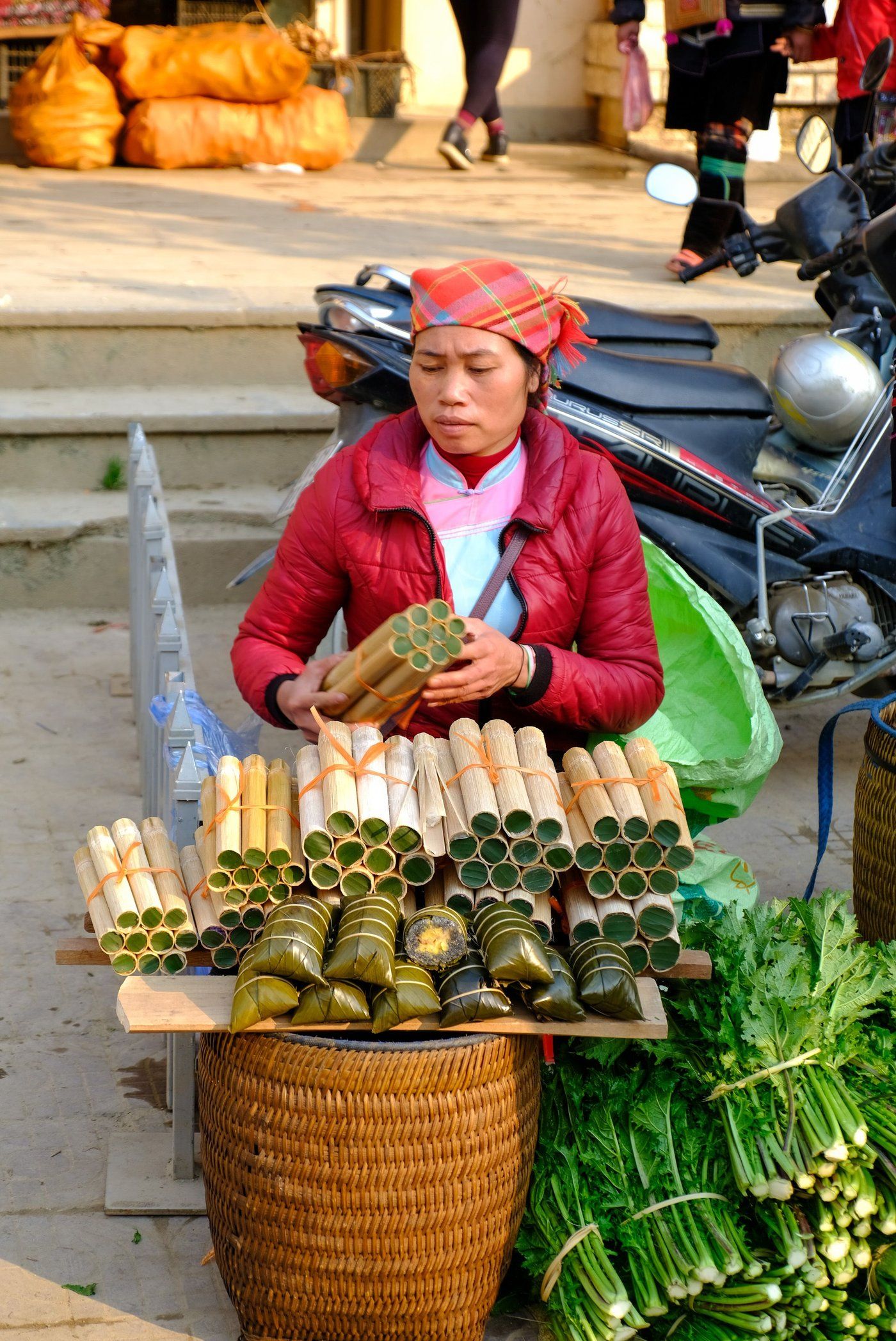
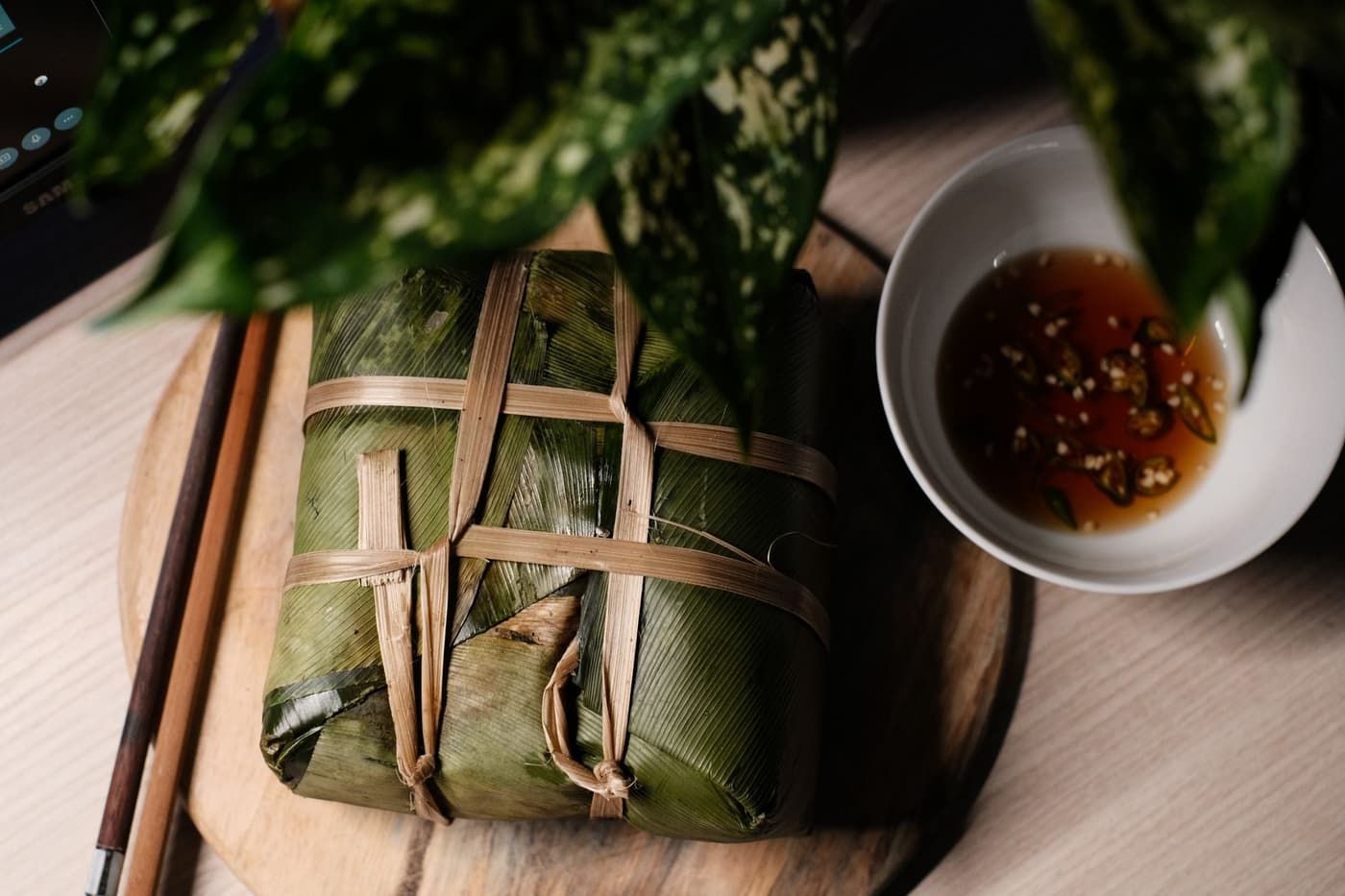
Lunar New Year has the richest set of dishes. In the north, square banh chung, sticky rice with mung bean and pork wrapped in dong leaves, sits on the altar beside gio lua, a pork roll pounded smooth and steamed in banana leaf, and pickled shallots to cut the fat. In the south the rice cake is cylindrical banh tet, and the main dish is thit kho trung, pork belly and eggs braised in coconut water until dark and sweet, eaten for days after.
Families also lay out a tray of five fruits on the altar. In the south the choice is often a pun: custard apple, coconut, papaya and mango sound together like a wish for just enough to spend.
Sticky rice runs through Vietnamese food traditions and turns up at nearly every rite. Xoi gac, coloured red with the flesh of the gac fruit, is made for Tet and weddings because red means luck. Banh troi, small balls of glutinous rice with a palm sugar centre, are made on the third day of the third lunar month for the Cold Food Festival. At weddings in the north, banh phu the, the husband-and-wife cake, is wrapped in pairs and tied together.
Each region keeps its own occasion dishes. Hue, the old capital, kept court habits of many small, carefully made dishes and a strong Buddhist vegetarian tradition, with meals of tofu and mushroom shaped and seasoned to look like meat for pagoda feasts. The Mekong Delta cooks with coconut, river fish and fruit, and its festival food runs sweeter. In the mountains, Hmong and Tay families steam five-coloured sticky rice for festivals, each colour from a different leaf or root.
Most Vietnamese food traditions live at home, so the best chance to taste them is in the weeks before Tet, when markets fill with leaf-wrapped cakes and pork rolls, or in a family-run restaurant that cooks home food. For the national dishes and each destination’s own food guide, see the lists on this page and the Street Food interest.
Festivals
Vietnamese New Year traditions explained: Tết preparations, lucky money, the first visitor, flowers, greetings and food, and how customs vary by region.
Northern Vietnam - Food
Banh chung, the square chung cake of Tết: its legend, ingredients, the long boil, craft villages near Hanoi and how it compares with southern bánh tét.
Festivals
A guide to Tết in Vietnam: when the Lunar New Year falls, how families prepare, first-visitor customs, lucky money, blossoms, greetings and bánh tét.