Hoa Lu Ancient Capital
Hoa Lu Ancient Capital in Ninh Binh: temples to the first emperors of independent Vietnam, a stone dragon bed and a tomb on the mountain above.
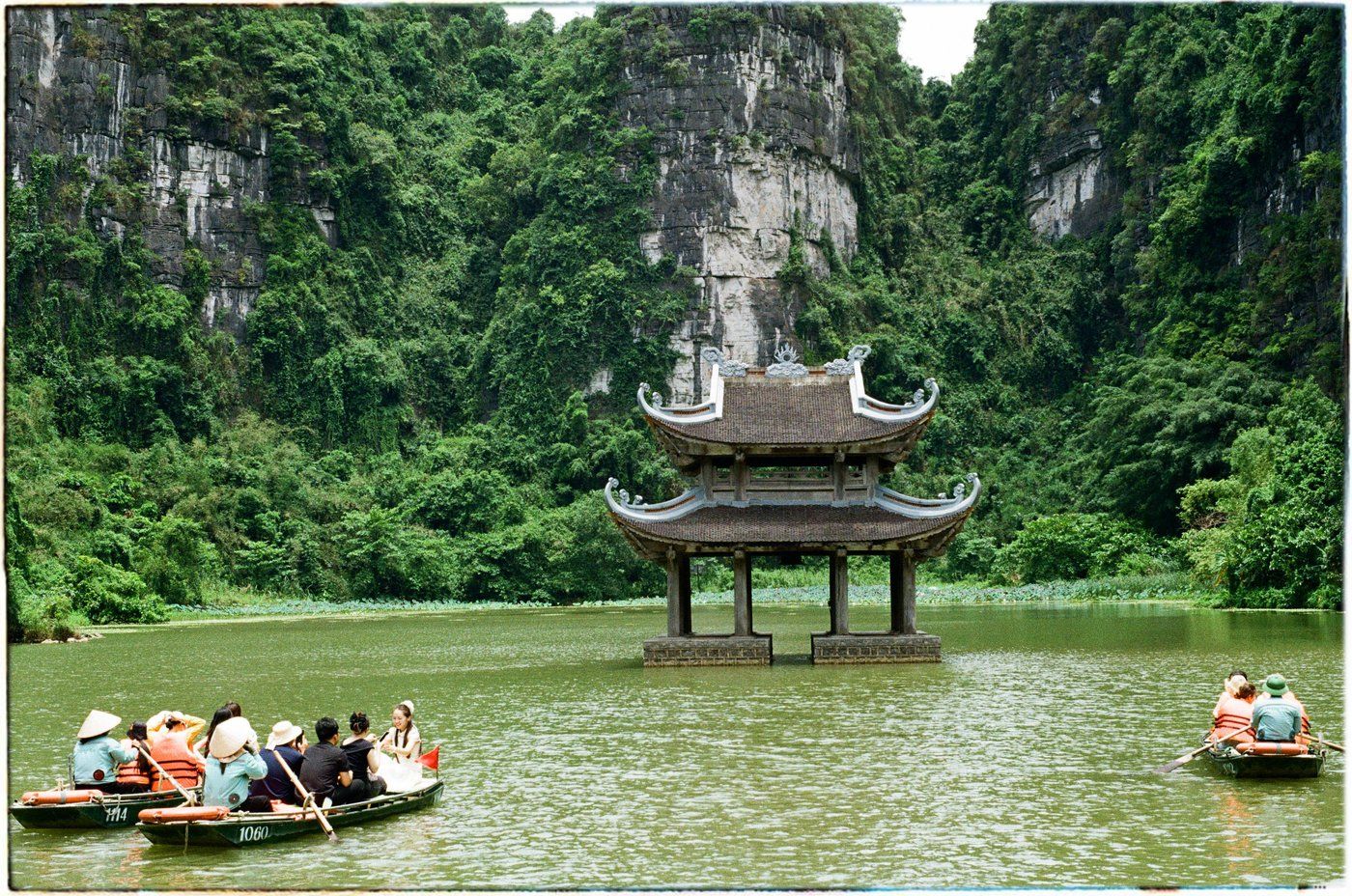
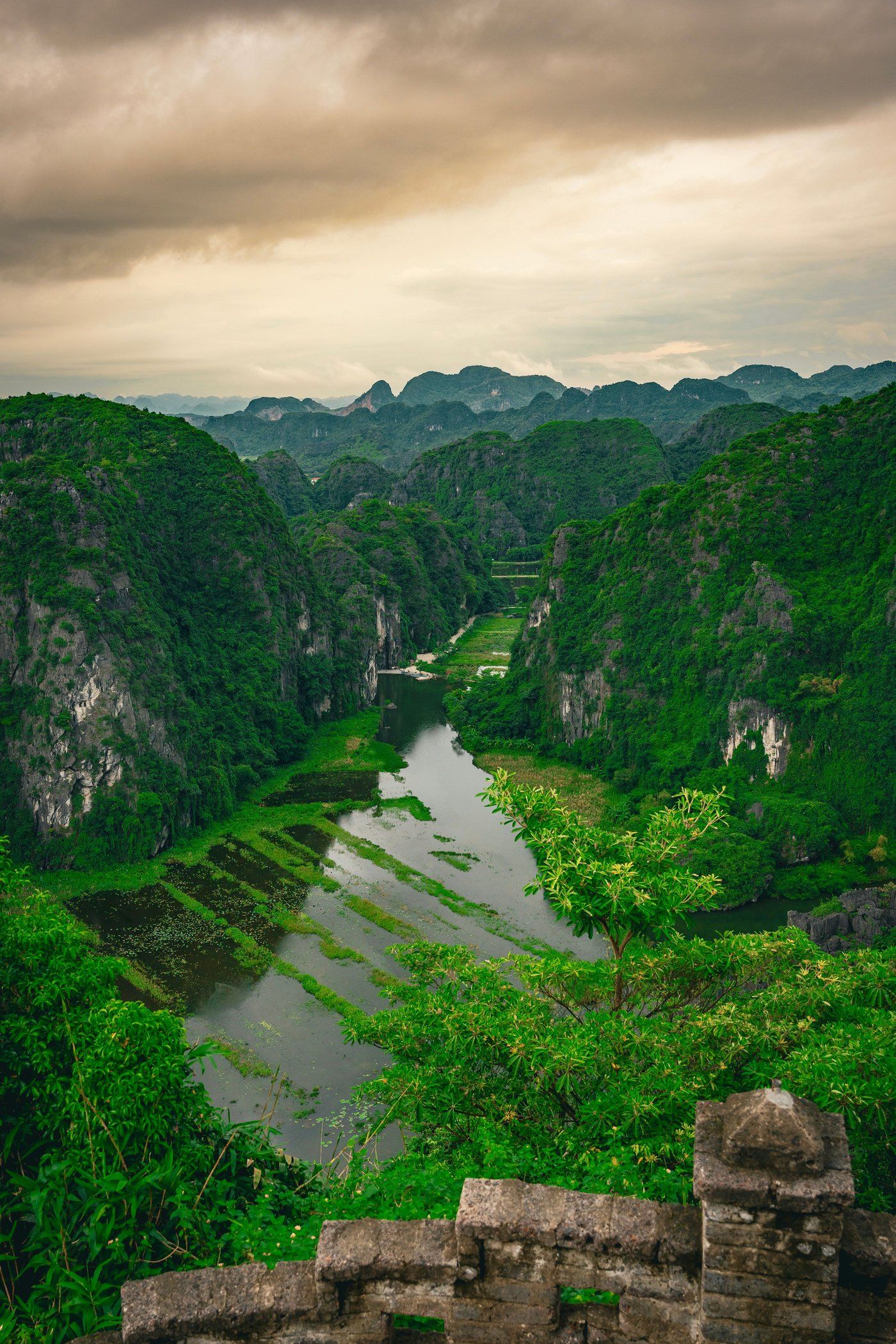
The Hoa Lu Ancient Capital (Cố đô Hoa Lư) was the seat of Vietnam’s first independent dynasties at the end of the 10th century. The emperors chose a valley closed by limestone mountains, which served as natural walls, with earth ramparts built across the gaps. Of the palaces nothing stands, but the two temples that remember the founding emperors are still places of worship, and the mountains around them are unchanged.
Temples of the Hoa Lu ancient capital
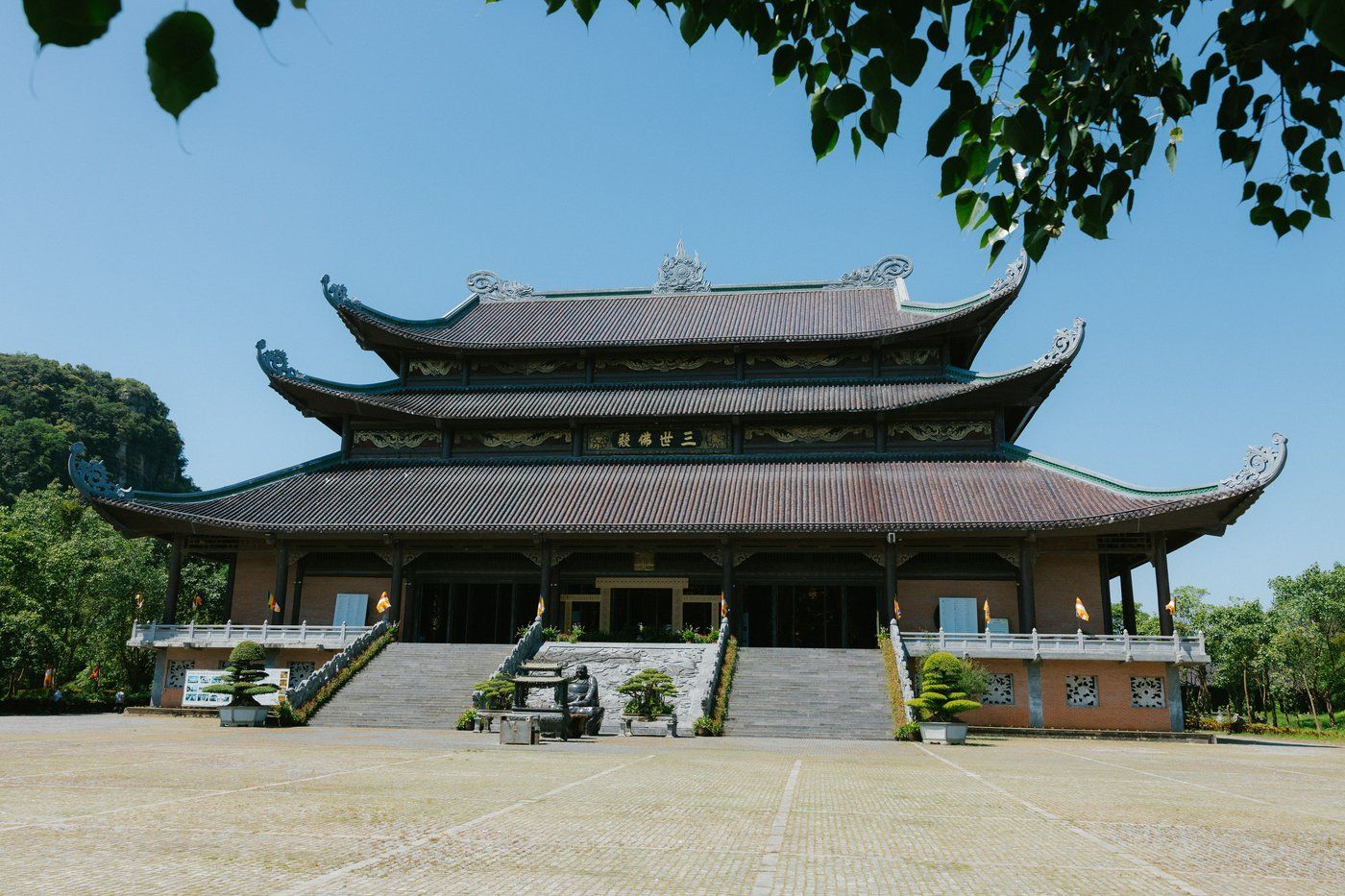
The first temple honours Dinh Tien Hoang, the emperor who united the country. Before its main hall lies a stone dragon bed, a carved stone block on which offerings are placed, its surface covered with dragons in relief. Inside, in the dim back sanctuary, the emperor sits in the centre with statues of his sons beside him. The carving of the wooden beams and the stone dragons at the steps dates from rebuilding in the 17th century, and is some of the finest of its time.
A short walk away, the second temple honours Le Dai Hanh, who took the throne after Dinh Tien Hoang and defeated an invasion from the Song in China. Here his statue is joined by that of Queen Duong Van Nga, wife first of Dinh Tien Hoang and then of Le Dai Hanh, who handed power to Le when the country was in danger. Her place in the temple reflects how the story is still told: as a decision made for the country.
The mountain tomb
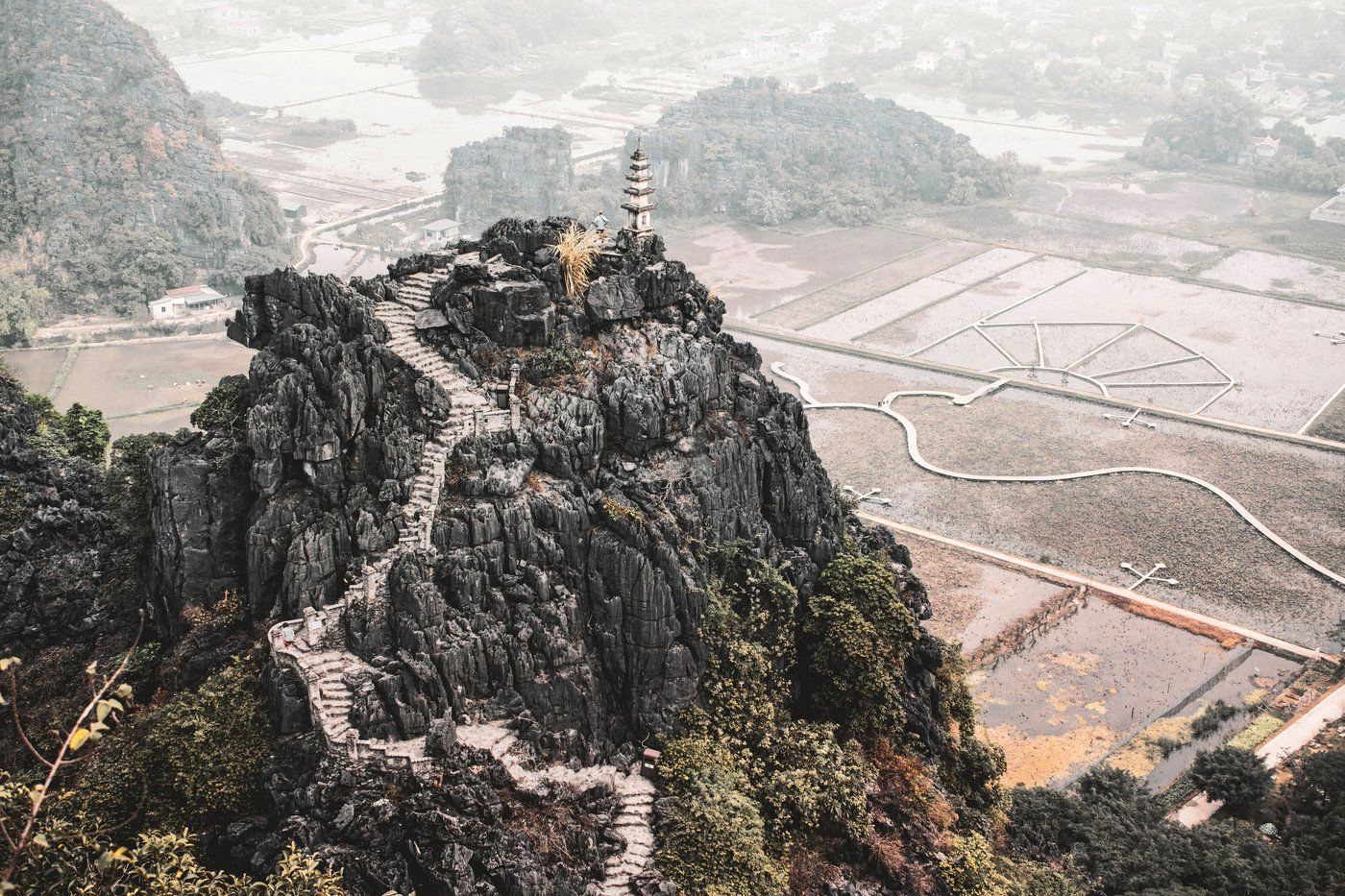
Across the road, a long stone stairway climbs Ma Yen mountain to the tomb of Dinh Tien Hoang, on a ridge above the valley. The climb is steep, but from the top you see the shape of the Hoa Lu ancient capital: the ring of mountains, the river and the rice fields where the citadel once stood.
Visiting Hoa Lu
Allow an hour and a half for the two temples, and more if you climb Ma Yen. The Hoa Lu Ancient Capital is close to Trang An and Tam Coc, and fits easily into a day of Ninh Binh sights. Its festival is held in spring, after Tet. Dress modestly, as for any temple; you may see families lighting incense to the emperors and asking for their protection.
Stories
Hoa Lu Ancient Capital: stories are on the way.