Con Dao Prison
The Con Dao Prison camps: French and South Vietnamese jails where tens of thousands were held, from Phu Hai to the tiger cages.
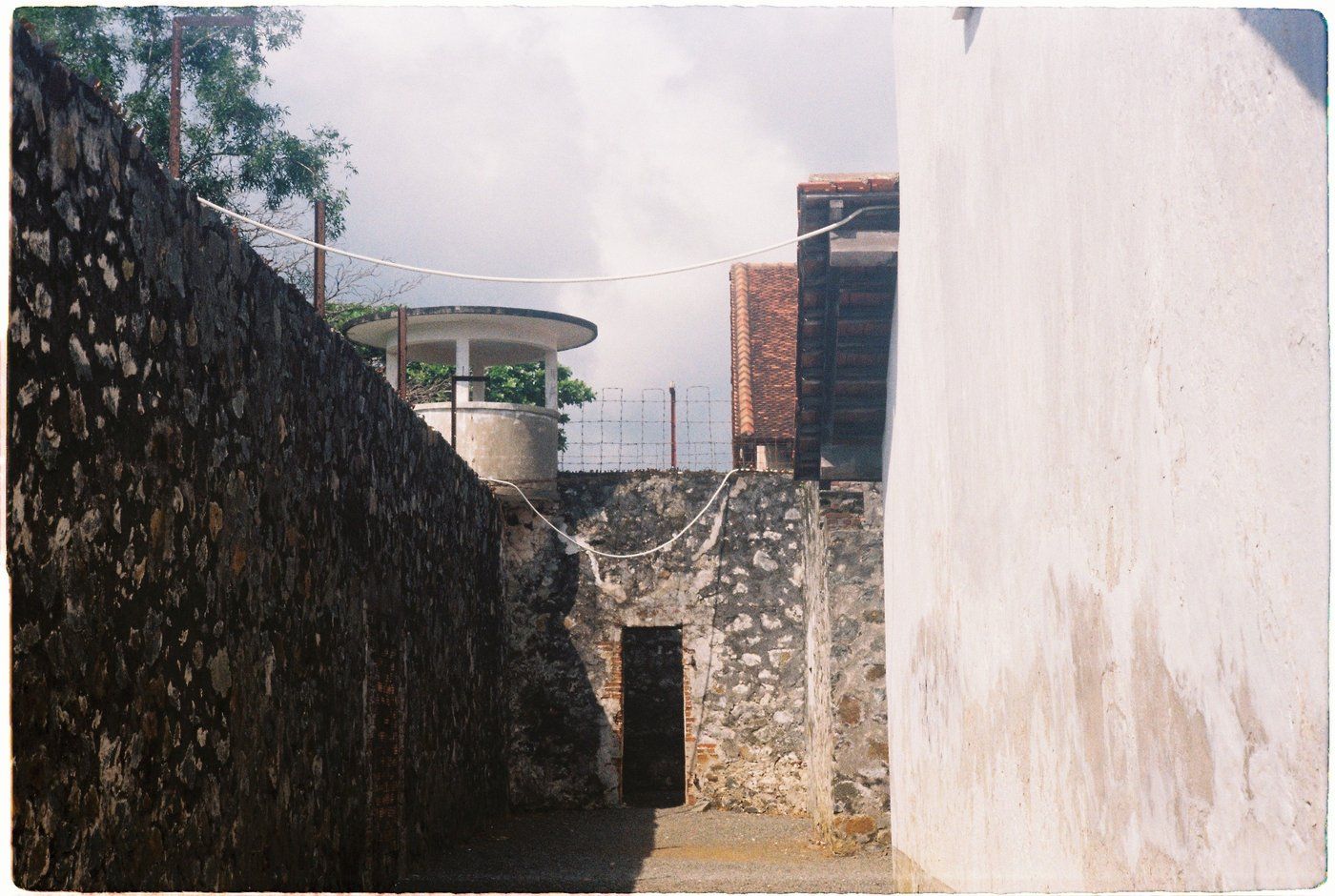
The Con Dao Prison (Nhà tù Côn Đảo) is not one building but a group of camps on the main island of Con Dao, spread through the town of Con Son and its outskirts. They were built over more than a century, first by the French and then by the government of South Vietnam, and held people who opposed each regime in turn. Several future leaders of the country spent years here, among them Le Duan, Pham Van Dong and Ton Duc Thang. Today the camps are kept as a memorial, and for many Vietnamese a visit is a pilgrimage.
The camps of the Con Dao Prison
Phu Hai is the oldest, built soon after the French took the islands in the 1860s. Its long cell blocks surround a courtyard, and inside, life-size figures of shackled prisoners lie on concrete platforms, chained by the ankles to a single iron bar. Phu Son and other camps nearby show how the system grew.
The most notorious are the tiger cages, built by the French around 1940: rows of pit cells roofed with iron bars, along which guards walked and from which they threw lime and water down on the prisoners. Their existence was hidden for decades until 1970, when a visiting American delegation found them and photographs published in the United States caused an outcry. Later, a second set of cells was built, which the prisoners called the American tiger cages.
Other sites
The Con Dao Museum tells the story of the Con Dao Prison camps and the islanders, with documents, photographs and objects left by prisoners. On the seafront, the old governor’s residence and the jetty known as Cau Tau 914 are part of the same history; the jetty’s name is said to count the prisoners who died building it.
Visiting
Allow half a day to see the main camps and the museum, which are close together and can be visited on foot or by bicycle. A single ticket usually covers several sites. The Con Dao Prison camps are hot and airless in the middle of the day, so go early or late. Many visitors end the day at Hang Duong Cemetery, where many prisoners are buried.
Stories
Con Dao Prison: stories are on the way.