Nguom Ngao Cave
Nguom Ngao Cave near Ban Gioc: a lit walk through the Tay ‘tiger cave’ under the hills of Cao Bang, past stalactites, pillars and terraced pools.
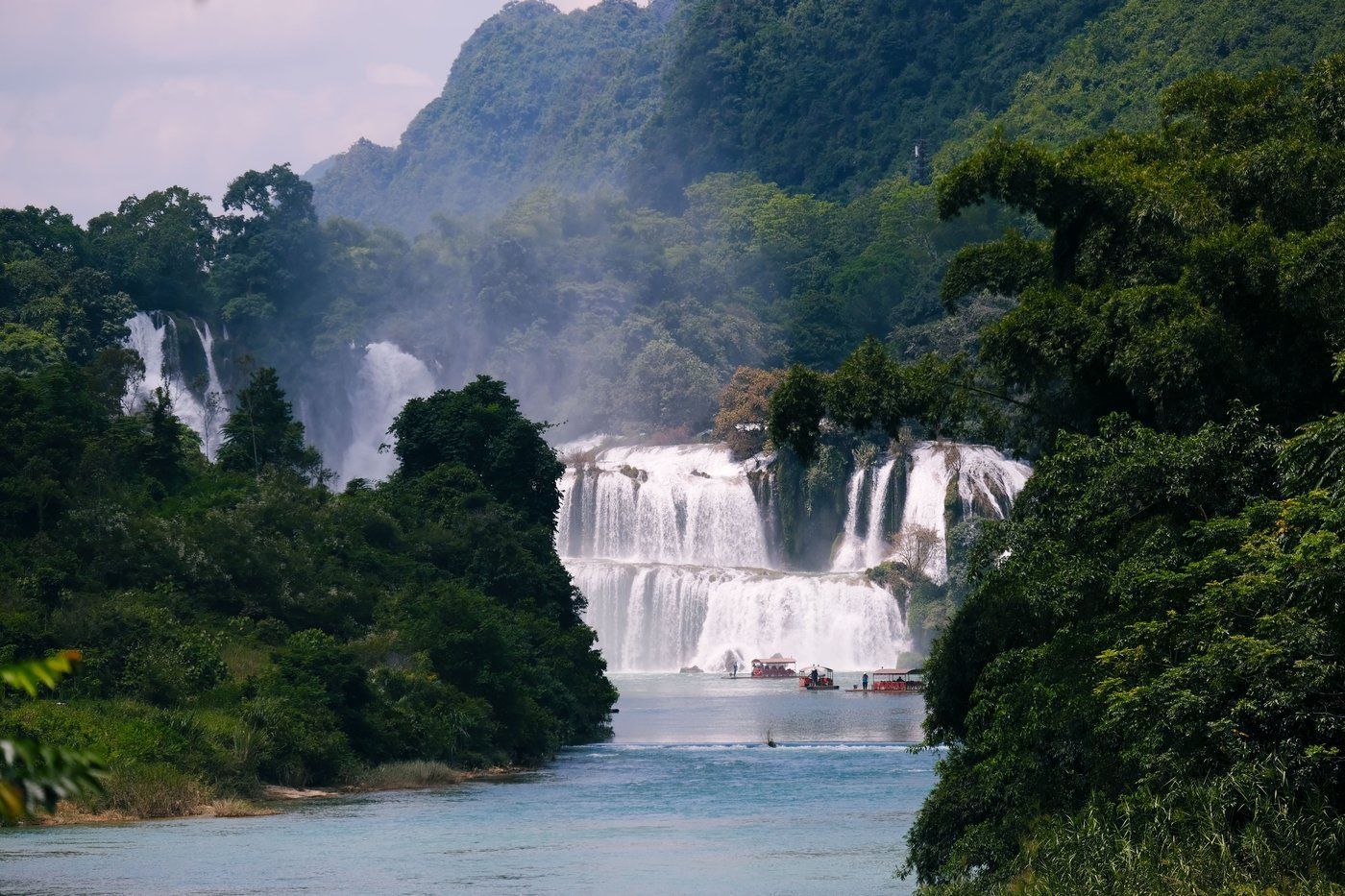
Nguom Ngao Cave (Động Ngườm Ngao) lies under the limestone hills of Trung Khanh district, near Ban Gioc Waterfall. In the language of the Tay, who farm the valley outside, “ngườm” means cave and “ngao” means tiger. The story says tigers once lived here and came down to take cattle from the village, until the villagers drove them out.
Inside Nguom Ngao Cave
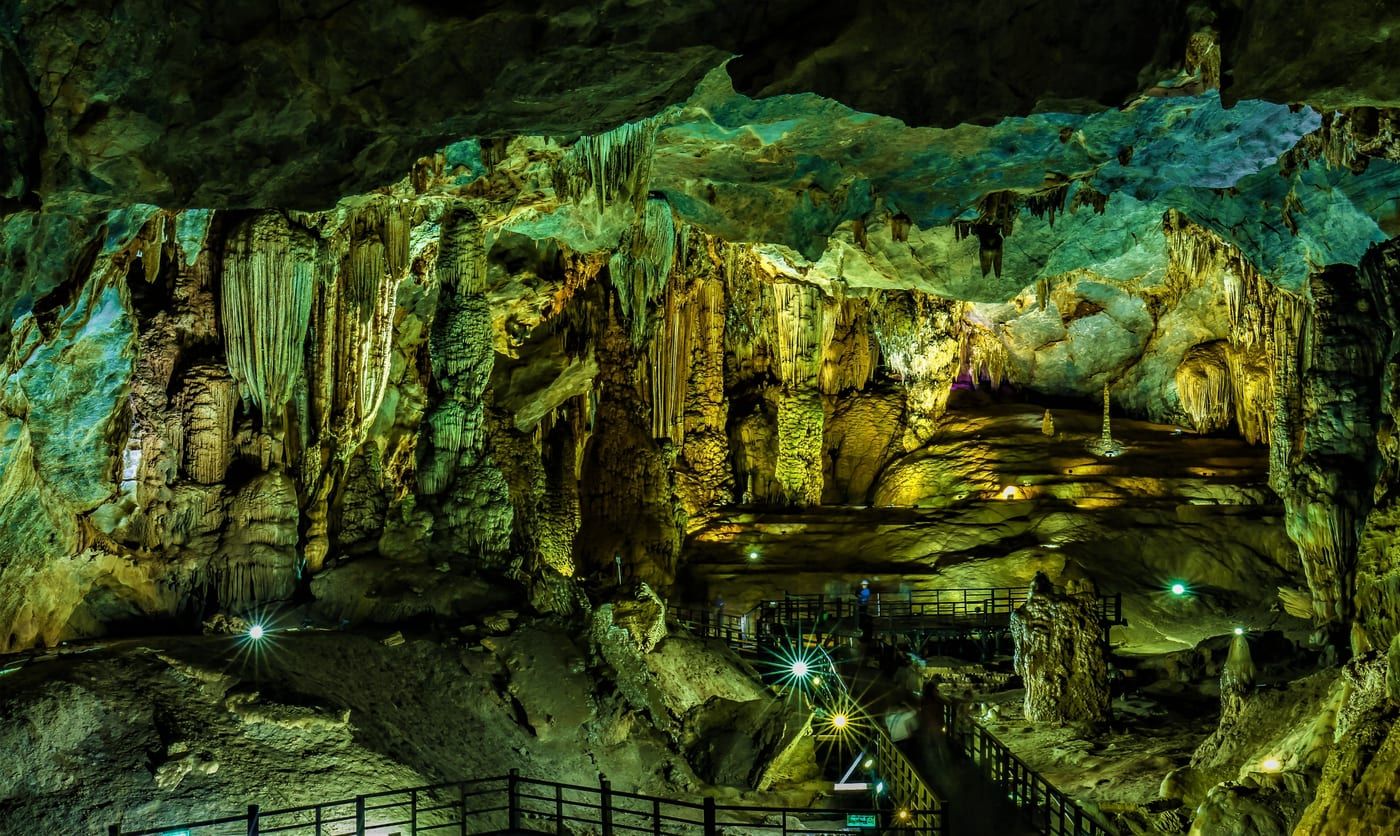
A paved and lit path leads through the cave for about a kilometre, entering at one opening and leaving at another. The passage is a sequence of chambers, some low, some high enough to lose the ceiling in the dark. Water still drips through the rock and keeps the formations growing: curtains of stalactites, thick pillars where stalactite and stalagmite have joined, and walls that glitter where the calcite catches the light.
Some of the most striking shapes are on the floor. In places, mineral-rich water has built up low rims of stone around shallow pools, layer on layer, so that the floor looks like the rice terraces of the hills outside. Local guides have names for many formations, after animals, flowers and figures from Buddhist and folk stories.
The air in Nguom Ngao Cave stays cool and damp all year, so the visit is a relief on a hot summer day. The path is mostly flat, with some steps and slippery patches, and the walk takes about an hour.
Chestnuts and the road back
Outside, the path back to the car park runs past fields of rice and maize, and in autumn past the chestnut trees that Trung Khanh is known for. Roasted chestnuts are sold by the road in season. Nguom Ngao Cave is usually seen on the same day as Ban Gioc Waterfall; go to the cave around midday when the falls are crowded, or in the afternoon on the way back. Wear shoes with a good grip. The Tay and Nung villages of the valley are introduced on the Cao Bang page.
Stories
Nguom Ngao Cave: stories are on the way.