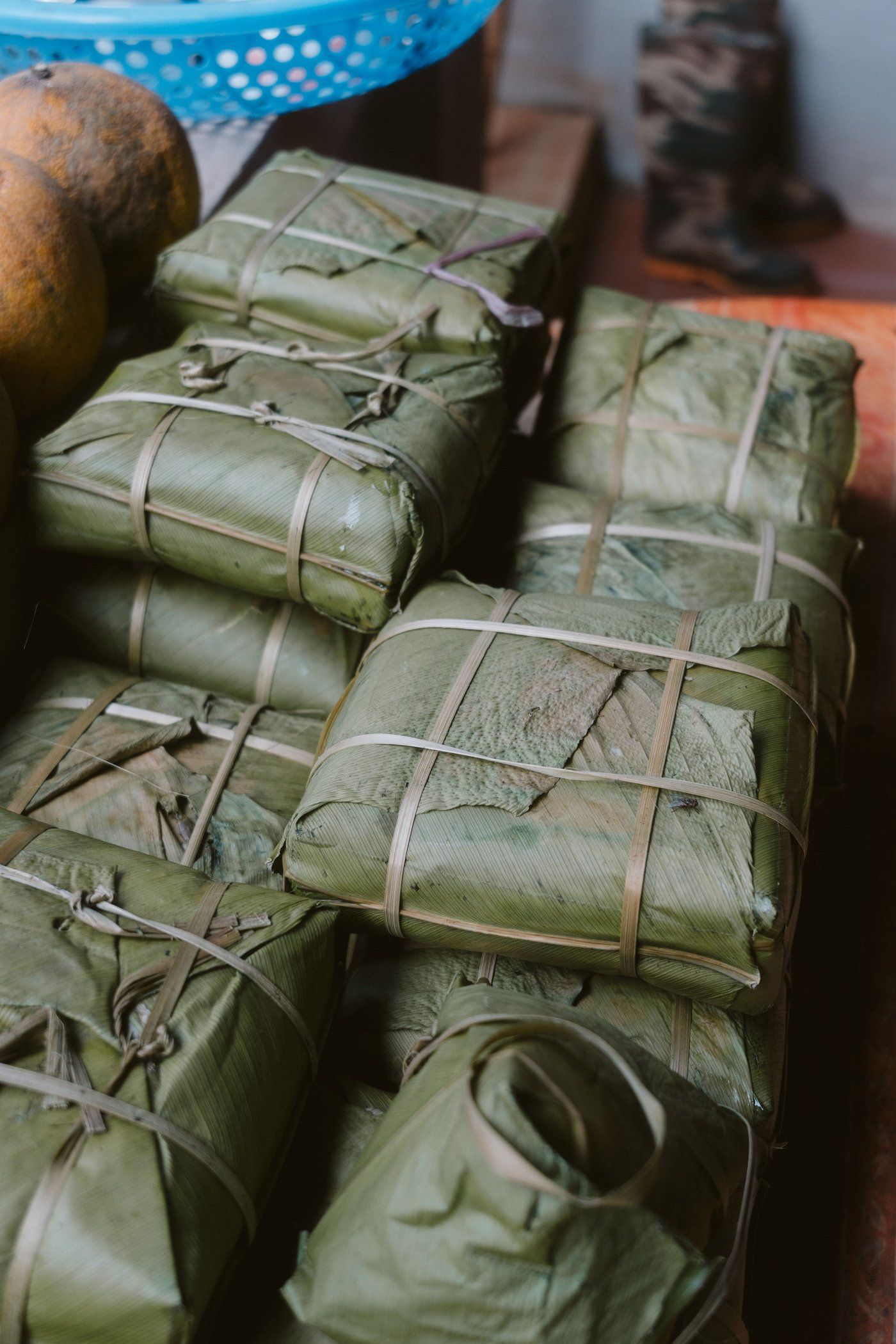
Banh chung
square sticky rice cake
Banh chung, the square sticky rice cake of Tet: its meaning, how families make it, regional cousins such as banh tet, and how to eat it.
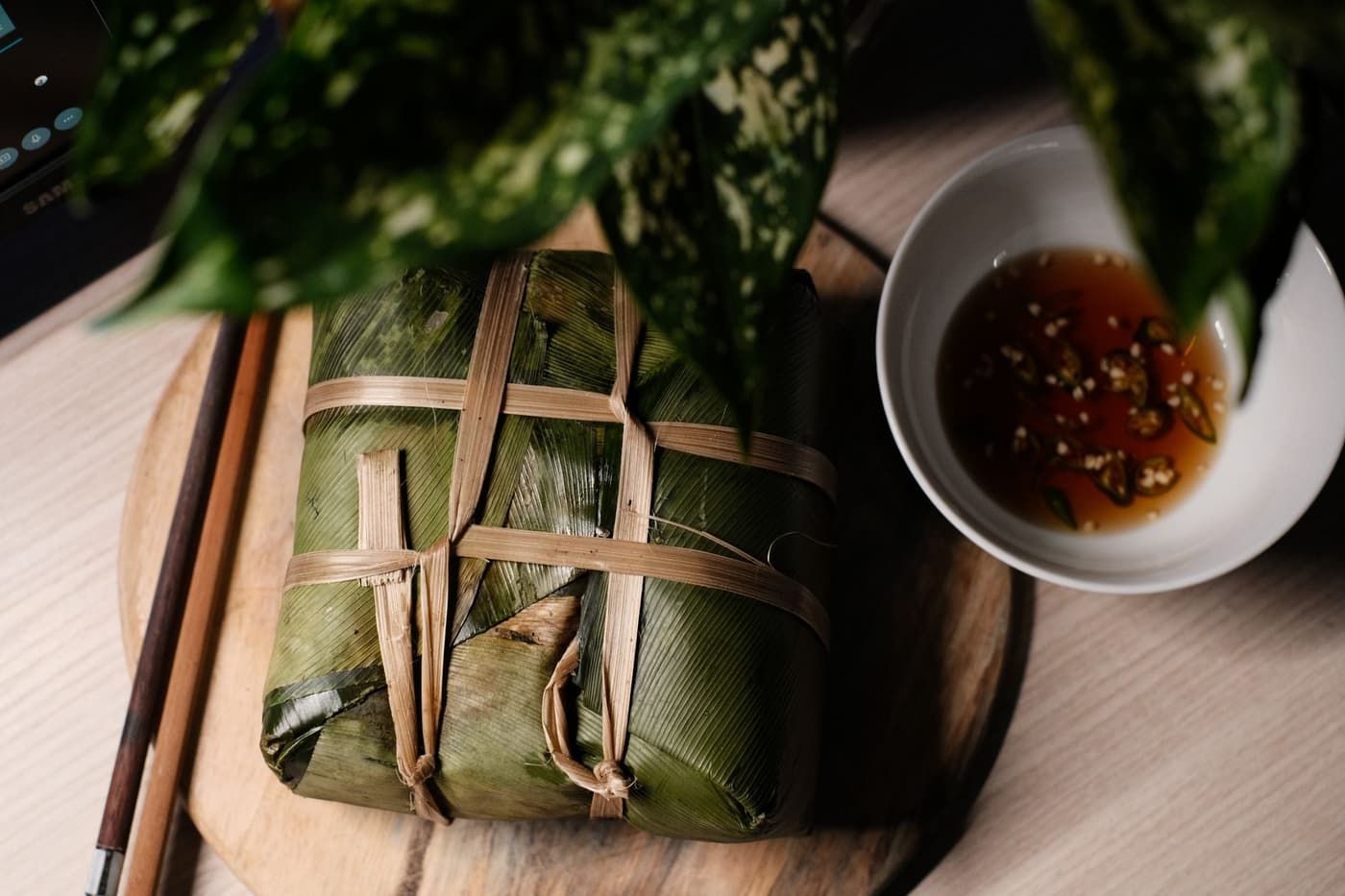
Banh chung (Bánh chưng) is a square cake of glutinous rice, mung beans and fatty pork, wrapped in green leaves and boiled through the night. It is the food of the northern New Year: no family altar at Tet feels complete without a pair of them, and for many Vietnamese the smell of a pot of banh chung simmering is the smell of the holiday itself.
A square for the earth
The cake is tied to the legend of Lang Lieu, a prince of the Hung Kings, who offered his father a square cake and a round one made from rice, the humblest food he had, instead of rare delicacies. The square banh chung stood for the earth, and the round banh giay for the sky, and the king chose him as heir. The story is told every year around the Hung Kings’ Commemoration and at Tet, and it gives the cake its meaning: gratitude to the ancestors, offered simply.
Making banh chung
Making the cakes is a family task in the days before Tet. Sticky rice and mung beans are soaked overnight, the beans are cooked and mashed, and pork belly is cut and seasoned with pepper, salt and fish sauce. The cakes are wrapped in dong leaves, often using a wooden mould to keep the corners sharp, and tied with strips of bamboo. They then boil in a large pot for many hours, while the family takes turns keeping the fire going and topping up the water.
Some villages near Hanoi, such as Tranh Khuc, are known for making banh chung in large numbers for the city, and many families now buy them rather than wrap their own.
Cousins across the country
In the south and centre, the same ingredients are wrapped in banana leaves and rolled into a long cylinder called banh tet, cut into rounds to serve. In the Mekong Delta it is sometimes dyed purple with la cam leaves, as the Can Tho food guide describes, or filled with banana. In the northern mountains, Tay communities make a humped version, banh chung gu, said to look like the back of a person bent over the fields.
Eating it
A banh chung is cut into squares or triangles, traditionally with one of the bamboo strings that tied it. It is eaten at room temperature with pickled shallots or pickled cabbage, which cut through the richness, and often with slices of cha lua sausage. Leftovers are fried in a pan until crisp on the outside, a favourite breakfast in the days after Tet. Outside the holiday, banh chung is sold year round in markets and shops in the north.