Silk and Weaving
Van Phuc silk, Cham and highland brocade, Hmong hemp and indigo: where to see Vietnam's looms still working, from Hanoi to the Mekong.
Cloth in Vietnam tells you who made it. Lowland Vietnamese villages wove silk for the court and the market; each mountain people has its own patterns, colours and fibres, and a skirt or jacket can show a woman’s group, her village and sometimes her age. The looms are still working, though fewer than before. In the lowlands the name to know is Van Phuc silk; in the hills, every people has its own cloth.
Van Phuc silk and the lowland villages
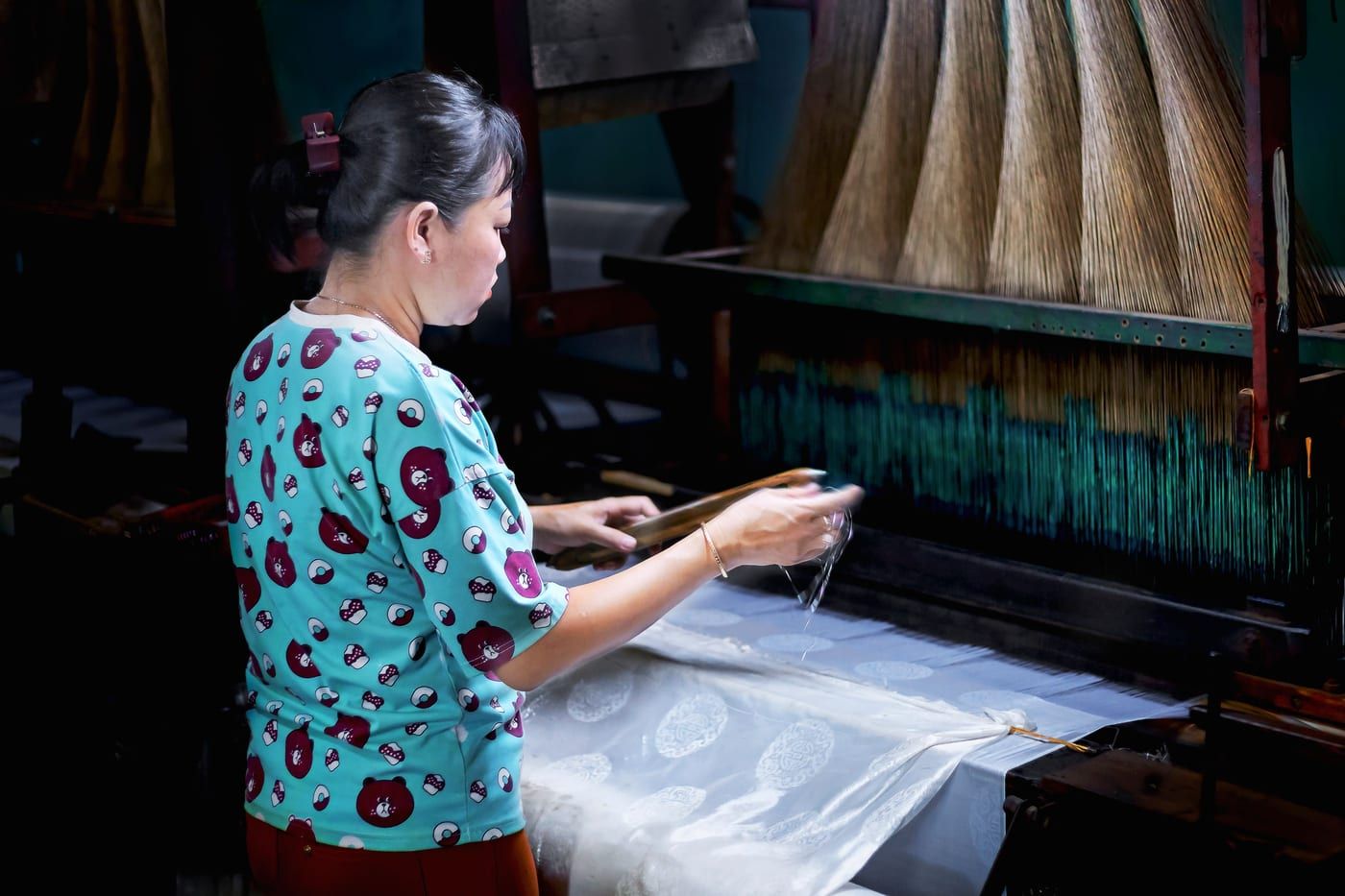
Van Phuc, now part of Hanoi in the Ha Dong district, is the old silk village of the north. Its weavers once supplied the royal court, and today the main street is lined with shops selling Van Phuc silk scarves and lengths of cloth, with some workshops still running mechanical looms behind them. In the centre, Ma Chau near Hoi An is another long-standing silk village, and in the Central Highlands the cooler plateau around Bao Loc became a centre for silkworm farming and reeling.
In the Mekong Delta, Tan Chau, close to Chau Doc, made lanh My A, a glossy black silk dyed with the fruit of the mac nua tree. It was once the cloth of fashionable southern women, and a few families still produce it.
Hemp, indigo and batik in the north
In the northern mountains, Hmong women grow hemp, split and twist the fibres by hand, weave them into cloth, and draw patterns on it in hot beeswax before dipping it in indigo. Around Sa Pa, you will see indigo-stained hands and cloth drying on fences in villages such as Cat Cat and Lao Chai. Thai women in the northwest weave silk and cotton on wooden looms under their stilt houses, and Dao women embroider in red and white.
Cham and highland looms
Cham weavers at My Nghiep, near Phan Rang, make brocade on back-strap and frame looms with geometric patterns handed down for generations. In the Central Highlands, Ede, K’Ho and other peoples weave dark cloth with red and white bands, and around Da Lat some villages sell directly to visitors.
Buying and visiting
Ask how a piece was made, whether it is Van Phuc silk or highland brocade: machine-woven copies of highland patterns are common in tourist markets, and true hand-woven cloth takes weeks and costs accordingly. Weekly markets in the mountains are good places to see women trading thread and finished pieces. For clay rather than cloth, see Pottery and Ceramics.
Stories
Silk and Weaving: stories are on the way.