Pottery and Ceramics
Bat Trang ceramic village and Vietnam's other pottery villages, from Phu Lang in the north to Thanh Ha and the Cham potters of the coast.
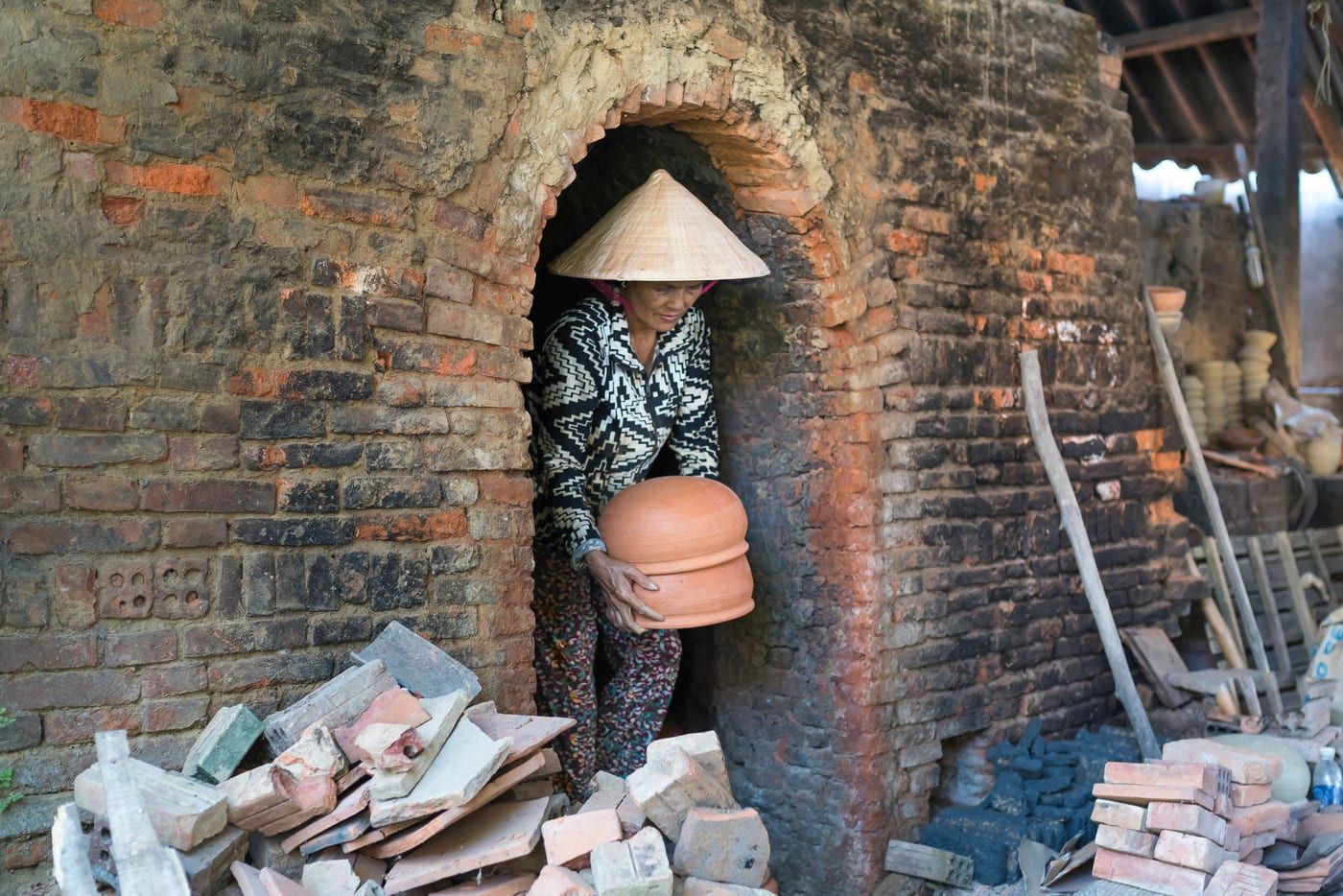
Pottery is one of the oldest crafts in Vietnam, and it is still made the way it was in many places: in family workshops, in villages where the whole economy turns on clay and kilns. A visit lets you watch the steps from raw earth to finished glaze, often in a courtyard behind the family’s house. The best known is Bat Trang ceramic village near Hanoi, but it is one of many.
Bat Trang ceramic village
Bat Trang sits on the Red River just outside Hanoi. Its potters have worked there for centuries, using clay brought by river, and the village now has hundreds of workshops making everything from rice bowls to garden pots and altar vases. Visitors can try the wheel, paint a cup and collect it after firing. The old part of Bat Trang ceramic village, with narrow lanes and walls studded with spent kiln supports, is worth walking.
Further out, Phu Lang in Bac Ninh makes heavy brown and eel-skin glazed stoneware, and Chu Dau, in Hai Duong, gave its name to blue-and-white ceramics that were shipped across Asia in past centuries; the pieces recovered from shipwrecks are now in museums.
Thanh Ha and Hoi An
Near Hoi An, Thanh Ha has made red terracotta for around five hundred years: bricks, roof tiles and water jars for the old trading town. Today the village also makes small figures and whistles for visitors, and a terracotta park shows models of buildings from around the world.
Cham potters of the south central coast
The Cham village of Bau Truc, in the dry country near Phan Rang, keeps a very different technique. Women build pots without a wheel, walking backwards around the clay to shape it, and fire them in the open under straw and wood rather than in a kiln. UNESCO listed the Cham art of pottery-making in 2022 as heritage in need of urgent safeguarding, because fewer young people are learning it.
The south and visiting
Around Ho Chi Minh City, the old kilns of Lai Thieu and Bien Hoa produced glazed ware for southern households, and some workshops still operate. When you visit Bat Trang ceramic village or any of the others, go on a weekday when the kilns are working, ask before entering a workshop, and buy directly from the family if you want to support the craft. For weaving villages, see Silk and Weaving, and for the wider picture, Arts and Crafts.
Stories
Pottery and Ceramics: stories are on the way.