Coffee and Tea
Vietnamese coffee culture and the older tea habit: the phin filter, egg and salt coffee, highland robusta and lotus-scented tea.
Vietnam drinks two ways at once. Tea is the old drink, offered to every guest and poured at every family gathering. Coffee came with the French in the 19th century and became, in the 20th, one of the country’s great crops. Vietnamese coffee culture grew from there, and it now sets the rhythm of every street.
Coffee from the highlands
Most Vietnamese coffee is robusta, grown on the red basalt soils of the Central Highlands around Buon Ma Thuot, Pleiku and the plateau near Da Lat. Vietnam is one of the largest coffee producers in the world. The beans are often roasted dark, sometimes with butter or other additions, which gives the strong, bitter cup Vietnamese prefer.
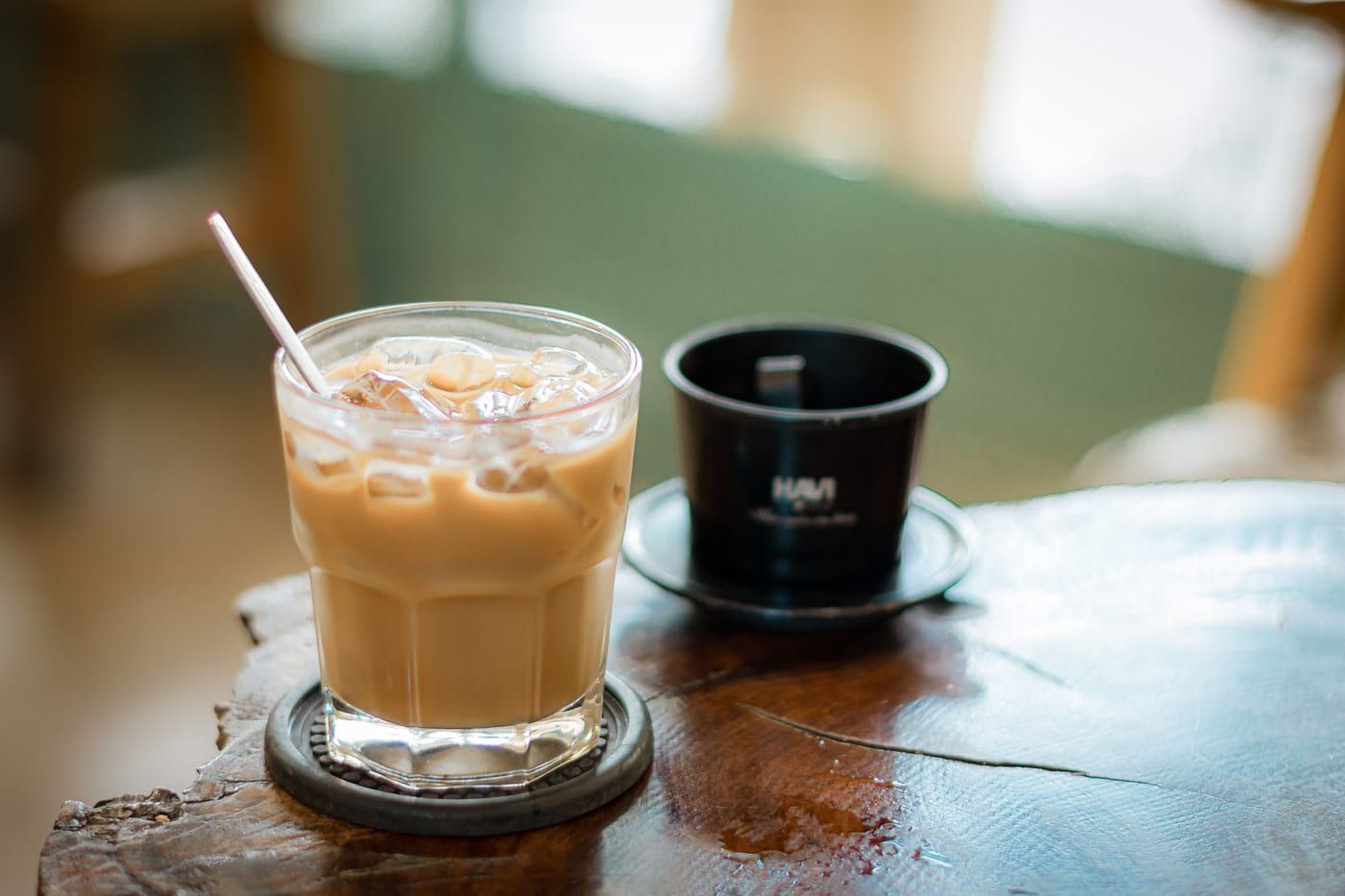
At the centre of Vietnamese coffee culture is the phin, a small metal filter set on top of the cup, through which the coffee drips slowly while you wait. Ca phe sua da is phin coffee over ice with sweetened condensed milk, the milk a leftover from the days when fresh milk was scarce.
Vietnamese coffee culture in the cities
Hanoi is known for egg coffee: egg yolk whisked with sugar into a thick cream and spooned over black coffee. The story goes that it was created in the 1940s, when milk was short. Hue has salt coffee, with a lightly salted cream on top. Ho Chi Minh City drinks a lot of iced coffee at all hours, often from carts, and in the south the coffee shop can be a hammock cafe at the roadside. Coconut coffee and yoghurt coffee are newer, and spreading.
Tea, the older habit
Green tea is the everyday drink. At a street-corner stall, tra da, weak iced green tea, comes free or for very little with a meal. Thai Nguyen, north of Hanoi, is the best-known tea region, and its tight, dark leaves make a strong brew. Lotus tea is a Hanoi speciality: green tea scented by leaving it inside lotus flowers from West Lake overnight, a slow, costly process. In the northern mountains, Dao and Hmong communities harvest shan tuyet tea from tall old trees with white down on their buds.
Where to sit
Vietnamese coffee culture is best seen sitting down, and every town has its cafe streets. In Hanoi, small cafes up narrow stairs look out over the old quarter; in Da Lat, pine-shaded garden cafes; in the Mekong Delta, riverside places on stilts. Visiting coffee farms around Da Lat shows how the crop is grown and dried. For food to go with it, see Street Food.
Dishes
Stories
Coffee and Tea: stories are on the way.